
Measuring the Magic of the Adjustment with Dr Trevor Colm DC – Chiro Hustle Podcast 792
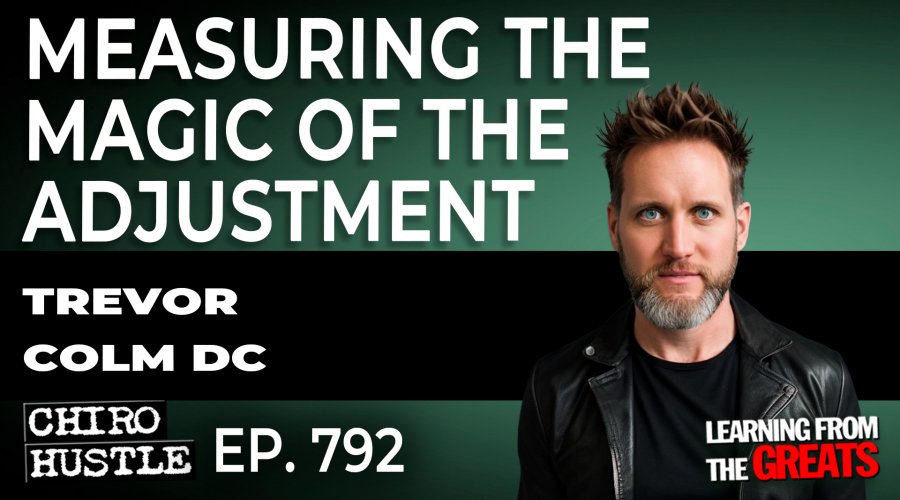
INTRODUCING Dr Trevor Colm DC
5 Alternate Titles
- The Adjustment That Brought His Brain Back Online with Dr Trevor Colm DC – Chiro Hustle Podcast 792
- Measuring the Magic of the Adjustment with Dr Trevor Colm DC – Chiro Hustle Podcast 792
- Closing Chiropractic’s Perception Gap with Dr Trevor Colm DC – Chiro Hustle Podcast 792
- Brain Function, Subluxation, and the Future with Dr Trevor Colm DC – Chiro Hustle Podcast 792
- Making BJ Palmer’s Big Idea Measurable with Dr Trevor Colm DC – Chiro Hustle Podcast 792
🧠 Background
In this episode of the Chiro Hustle Podcast, James Chester sits down with Dr Trevor Colm DC for a conversation that bridges chiropractic philosophy, brain function, research, technology, and the future of the profession.
Dr Colm’s chiropractic story began after a major concussion while playing college lacrosse. His short-term memory was wiped out. Brain fog took over. He stepped away from school and wondered whether he would ever recover enough to graduate, work, build a family, or live a clear and focused life again.
Then chiropractic entered the story.
After one adjustment from the right chiropractor, Dr Colm describes a life-changing shift: the brain fog cleared, his memory returned, his choices improved, his body got stronger, and his purpose came into focus. That experience created the burning question that would shape his life: why did one adjustment change everything when another seemingly similar adjustment did nothing?
That question eventually led to Cortex, a robotic EEG-based brain measurement technology designed to help chiropractors see, measure, and communicate the impact of the chiropractic adjustment on the nervous system.
This episode is a principled, subluxation-centered conversation about making the unseen visible, closing chiropractic’s perception gap, and giving the world a clearer understanding of the value of the adjustment.
🔥 Highlights
Dr Trevor Colm DC shares how a major concussion wiped out his memory, caused months of brain fog, and forced him to step out of college.
He explains how one chiropractic adjustment changed the trajectory of his life by helping him experience the connection between the spine, the brain, the nervous system, and human potential.
James and Dr Colm discuss why many people still think chiropractic is only about backs, pain, and popping joints, while the deeper chiropractic message is about nervous system function, adaptation, and life expression.
Dr Colm introduces Cortex, a brain-based technology using EEG and robotics to help make brain activity visible in real time.
The conversation explores how chiropractic research, big data, artificial intelligence, and clinical observation may help the profession communicate the value of the adjustment with more clarity.
Dr Colm emphasizes that he is philosophical “to the bone,” while also believing that data and evidence can help unify the chiropractic profession.
James and Dr Colm discuss BJ Palmer’s Big Idea, the Sacred Trust, subluxation-based care, and the opportunity to bring chiropractic to the masses.
Dr Colm gives simple but powerful advice to chiropractic students: never underestimate how powerful what they are learning to do really is.
From Our Sponsors and Partners
JAMES CHESTER (HOST): You made it to Chiro Hustle! Sit back and learn from the greatest influencers in the profession on the world’s number-one chiropractic podcast. Before we dive into this powerful episode, please remember to subscribe to our channels and give us a 5-star rating on iTunes to continue hustling.
This episode is brought to you by…
ChiroHD – More than an EHR; Practice Management, Simplified
The Chiro Speaking Company – Attract, Educate & Convert
ChiroSpring – cloud-based, user-friendly software with all the essential features chiropractors need
The Chiro Hustle Podcast is sponsored by Chiro Health USA, ChiroScript AI, Chiro Moguls, Pure Chiro Notes, Titronics, Sherman College of Chiropractic, Life Chiropractic College West, and the IFCO.
Do you want to support The Sacred Trust and uphold a Subluxation model without the grind of launching a new project? Visit our Patreon, choose the tier best suited for you. That way we can continue keeping “The Big Idea” strong, supporting speech, medical, and family health freedoms.
Now let’s hustle!
📖 Summary
Dr Trevor Colm DC did not come into chiropractic through a casual wellness story. He came in through crisis.
After suffering a major concussion while playing college lacrosse, Dr Colm lost his short-term memory and lived with severe brain fog for months. Nothing seemed to improve. He began wondering whether his future had been taken from him.
A friend suggested chiropractic. At first, he questioned how “getting his back popped” could possibly help a concussion. But with no other answers, he tried it. The first chiropractor produced no meaningful change, but Dr Colm sensed there was something there. Then he found another chiropractor, received an adjustment, and everything changed.
Within days, the fog began to lift. Within weeks, his memory recovered. Within months, his life came into focus. He returned to school, played lacrosse at a higher level, got clearer on his future, improved his health, and discovered his purpose.
That experience left him with a question that became his life’s work: what made that adjustment different?
In this episode, Dr Colm explains how that question led him into chiropractic, philosophy, neuroscience, research, and ultimately the development of Cortex. Cortex is designed to help chiropractors measure brainwave activity through EEG in a fast, usable, clinical way. Rather than relying only on subjective reporting or delayed outcomes, Cortex aims to give chiropractors a clearer window into how the brain responds to care.
James and Dr Colm explore how this technology could help chiropractors communicate the value of subluxation-based care, support research, improve clinical decision-making, and close the gap between what chiropractic truly offers and what the public thinks chiropractic is.
At its core, this episode is about one thing: the adjustment matters. Not just because it may reduce pain, but because chiropractic is about the nervous system, the brain, adaptation, human potential, and the expression of life.
🔍 Diving In
This episode goes deeper than technology. Cortex is the tool, but the deeper issue is chiropractic’s identity.
Dr Colm describes what he calls the “perception gap.” Chiropractors provide an extremely high-value service, but much of the public still sees chiropractic as a low-value, musculoskeletal service. They often place it in the same mental category as massage, physical therapy, or basic back relief. That misunderstanding limits impact, limits reach, and keeps people from seeking the very care they may need.
The chiropractic adjustment, when understood through a principled lens, is not merely a mechanical intervention. It is a correction of interference. It is a way to help the body better express innate intelligence through the nervous system. When the brain and body communicate more clearly, people may experience changes far beyond pain relief.
Dr Colm’s story makes that point personal. His life did not change because someone simply moved a bone. His life changed because his nervous system began functioning differently.
Cortex represents a possible bridge between chiropractic philosophy and measurable function. Dr Colm explains that MRI and CT show anatomy, functional MRI and SPECT show blood flow, but EEG measures electrical activity — the tone and function of the nervous system. By making that information more accessible and clinically useful, Cortex may help chiropractors show the brain-based impact of the adjustment in a way the public can finally understand.
The most powerful thread in this episode is not “technology replaces chiropractic.” It is the opposite. Technology may finally help chiropractic communicate what principled chiropractors have been saying all along: the adjustment is powerful because the nervous system is powerful.
Dr Colm also makes a strong case for unity in the profession. He does not see philosophy and evidence as enemies. He sees them as two parts of a larger truth. Subluxation-based chiropractic can remain principled while also building stronger research, stronger communication, and stronger public trust.
This is where BJ Palmer’s Big Idea enters the conversation. If the adjustment can change the function of the nervous system, and the nervous system shapes how human beings adapt, perceive, decide, heal, and express life, then chiropractic is not a side issue. It is central to human performance, family health, community health, and the future of health care.
⚡ Action Steps
For chiropractors:
- Re-examine how you communicate the adjustment. Stop reducing chiropractic to pain, posture, or popping joints. Speak clearly about the nervous system, brain function, subluxation, adaptation, and life expression.
- Look for the “brain story” in your practice. Patients often report better focus, better sleep, better choices, better emotional regulation, and clearer decision-making. Learn to listen for those stories and communicate them responsibly.
- Stay principled, but do not be afraid of evidence. Philosophy and research do not have to fight each other. The strongest future for chiropractic may come from standing firmly on principle while measuring and communicating results more clearly.
- Teach patients the perception gap. Help them understand that chiropractic is not simply a back-pain service. It is a nervous system-centered approach to better function.
- Get curious about brain-based chiropractic. Tools like Cortex may help the profession demonstrate what chiropractors have observed for generations: the adjustment can change far more than pain.
- Share this episode with chiropractic students and young doctors. They need to hear that the adjustment can truly change lives, and they need to understand why the philosophy still matters.
For chiropractic students:
- Do not underestimate what you are learning to do.
- Study philosophy deeply.
- Learn the science honestly.
- Find mentors who stretch your thinking.
- Remember that chiropractic is not small. Done right, it can change the world.
📢 Hashtags:
#ChiroHustle #Chiropractic #DrTrevorColm #Subluxation #BrainFunction #NervousSystem #ChiropracticAdjustment #CortexBrain #ChiropracticResearch #BrainBasedChiropractic #ChiropracticPhilosophy #FutureOfChiropractic #InnateIntelligence #BJPalmer #SacredTrust
Chiro Hustle, Chiro Hustle Podcast, Chiro Hustle Podcast 792, Dr Trevor Colm DC, Trevor Colm chiropractor, Cortex brain, Cortex chiropractic, cortexbrain.com, brain-based chiropractic, chiropractic and brain function, chiropractic concussion story, chiropractic adjustment brain, subluxation-based chiropractic, principled chiropractic, chiropractic philosophy, BJ Palmer Sacred Trust, innate intelligence, nervous system chiropractic, EEG chiropractic, chiropractic research, chiropractic technology, future of chiropractic, chiropractic big data, chiropractic AI, brain health chiropractic, chiropractic students, chiropractic communication, perception gap chiropractic, value of the adjustment, James Chester Chiro Hustle