
From Best-Kept Secret to First Choice with Dr. Joe Betz DC – Chiro Hustle Podcast 807
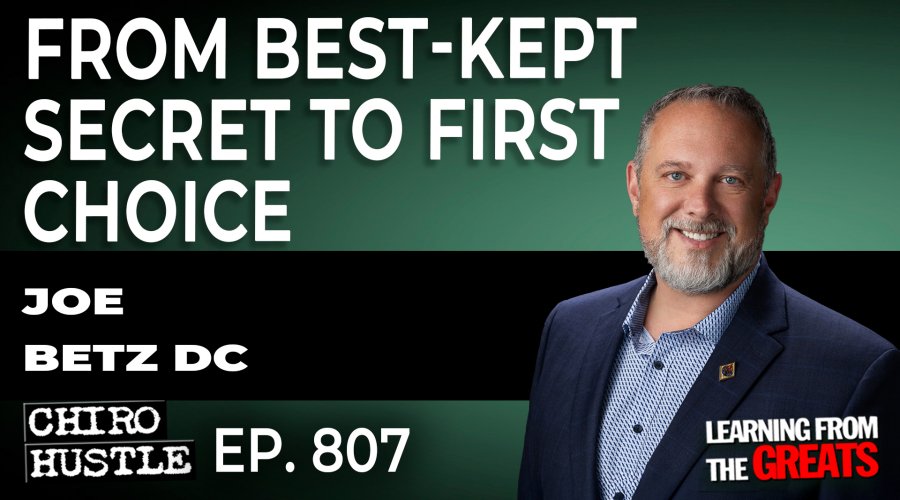
INTRODUCING Dr Joe Betz DC
5 Alternate Titles
- One Profession, One Voice with Dr. Joe Betz DC – Chiro Hustle Podcast 807
- Chiropractic’s Moment to Move with Dr. Joe Betz DC – Chiro Hustle Podcast 807
- Uniting Chiropractic for a Healthier Future with Dr. Joe Betz DC – Chiro Hustle Podcast 807
- Breaking Barriers to Chiropractic Care with Dr. Joe Betz DC – Chiro Hustle Podcast 807
- The Fight for Access and Research with Dr. Joe Betz DC – Chiro Hustle Podcast 807
🧠 Background
For generations, chiropractic has carried a vital truth: the body possesses an innate capacity to heal, regulate, and adapt. Yet despite serving as one of America’s largest doctor-level professions, chiropractic has too often remained the health care system’s best-kept secret.
In Episode 807 of the Chiro Hustle Podcast, James Chester speaks with Dr. Joe Betz DC, president of the International Chiropractors Association, about a potentially historic turning point. After decades of separate efforts, major voices across chiropractic are finding common ground and working together to increase access, strengthen representation, and secure the research support the profession needs.
The most powerful story is not one legislative proposal or organizational initiative. It is the story of a profession learning to speak with greater coordination without surrendering its principles.
Dr. Betz explains how the ICA, other chiropractic organizations, and the Make America Healthy Again movement have developed a shared commitment to changing an over-medicalized system. Their common ground begins with a simple recognition: health should not start with drugs and surgery when conservative, natural, and chiropractic approaches may serve the patient first.
That collaboration is being directed toward Medicare modernization, greater access for seniors, improved care for veterans, education about chiropractic for children and mothers, and enforcement of provider nondiscrimination protections.
Dr. Betz also exposes a striking research disparity. Chiropractic research is largely sustained through grassroots donations and volunteer labor, while a single medical research project may receive more money than chiropractic has historically had available across the profession. If chiropractic is to demonstrate the broader effects of detecting and correcting subluxation, it must invest in the science capable of documenting those outcomes.
This conversation is a call for unity in action—not uniformity of thought. Chiropractic can preserve its distinct identity, honor the adjustment, and protect the sacred trust while working together to make principled chiropractic care a first choice rather than a last resort.
🔥 Highlights
- Dr. Joe Betz reflects on nearly 20 years of service within ICA leadership.
- Why chiropractic’s diversity can be both a strength and an organizational challenge.
- How the profession can cooperate without abandoning its philosophical identity.
- Why the MAHA movement sees chiropractic as part of the answer to over-medicalization.
- The creation and purpose of the MAHA Chiropractic Hub.
- Proposed improvements to Medicare access, coverage, and practitioner choice.
- Why a Medicare opt-out provision matters to cash-based chiropractors.
- The effort to address provider discrimination under Section 2706(a).
- The staggering difference between medical and chiropractic research funding.
- How chiropractors can contribute their time, talent, treasure, and voice.
From Our Sponsors and Partners
JAMES CHESTER (HOST): You made it to Chiro Hustle! Sit back and learn from the greatest influencers in the profession on the world’s number-one chiropractic podcast. Before we dive into this powerful episode, please remember to subscribe to our channels and give us a 5-star rating on iTunes to continue hustling.
This episode is brought to you by…
ChiroHD – More than an EHR; Practice Management, Simplified
The Chiro Speaking Company – Attract, Educate & Convert
ChiroSpring – cloud-based, user-friendly software with all the essential features chiropractors need
The Chiro Hustle Podcast is sponsored by Chiro Health USA, ChiroScript AI, Chiro Moguls, Pure Chiro Notes, Titronics, Sherman College of Chiropractic, Life Chiropractic College West, and the IFCO.
Do you want to support The Sacred Trust and uphold a Subluxation model without the grind of launching a new project? Visit our Patreon, choose the tier best suited for you. That way we can continue keeping “The Big Idea” strong, supporting speech, medical, and family health freedoms.
Now let’s hustle!
📖 Summary
Chiropractic has spent too long positioned as the option people discover only after everything else has failed. Dr. Joe Betz DC believes the profession now has an opportunity to change that story.
In this episode, Dr. Betz joins James Chester to discuss the growing collaboration among chiropractic organizations and the Make America Healthy Again movement. The conversation explores efforts to expand patient access, modernize Medicare coverage, protect practitioner choice, improve care for seniors and veterans, and educate families about chiropractic.
At the center of these initiatives is a larger vision: moving America away from reflexive over-medicalization and toward prevention, wellness, and respect for the body’s innate healing capacity. For a principled chiropractor, access is not simply a business issue. It determines whether more people can receive a specific chiropractic adjustment and experience life with less interference from vertebral subluxation.
Dr. Betz also addresses chiropractic’s severe research-funding deficit. Much of the profession’s science is powered by donations and unpaid researchers, limiting how quickly chiropractic can investigate the adjustment’s relationship to whole-person health.
The episode is ultimately a call to coordinated action. Chiropractic does not need every doctor to practice identically. It needs enough shared purpose to protect its identity, strengthen its evidence, and bring chiropractic care to the people who need it.
🔍 Diving In
The defining story of this episode is the movement from fragmentation to coordinated action.
Chiropractic has always included a wide range of techniques, practice models, and perspectives. Even doctors who share the same philosophy may express the art of chiropractic differently. That variety can promote innovation, but it can also make advocacy difficult. When organizations speak separately or direct their energy against one another, the profession’s ability to influence health policy, public understanding, and research funding becomes diluted.
Dr. Betz does not suggest eliminating those differences. Instead, he describes a more mature path: respect the differences while identifying the ground on which chiropractors can stand together. This is collaboration without forced uniformity.
That distinction is especially important for subluxation-centered chiropractors. Unity should not require abandoning chiropractic’s foundational identity or reducing the profession to a collection of therapies for symptoms. The profession’s unique contribution begins with recognizing vertebral subluxation, correcting it through the chiropractic adjustment, and respecting the body’s innate intelligence.
The emerging relationship with the MAHA movement offers a timely opportunity because its language overlaps with principles chiropractors have communicated for generations. The body heals itself. Drugs and surgery have an appropriate place, but they should not automatically become the first response to every health concern. Nutrition, lifestyle, prevention, and natural approaches deserve meaningful consideration. Chiropractic belongs in that conversation—not as an imitation of medicine, but as a distinct profession with a distinct objective.
One immediate focus is Medicare modernization. As discussed in the episode, Medicare covers the chiropractic adjustment under limited circumstances but does not cover some services that may be necessary to evaluate a patient and determine appropriate care. This can create a financial barrier for seniors who need examinations or imaging before a chiropractor can make responsible clinical decisions.
Dr. Betz outlines three priorities supported through the collaborative effort: appropriate boundaries around covered services, an opt-out provision allowing chiropractors to privately contract with Medicare recipients, and a timely implementation requirement.
The opt-out issue illustrates how reform can support different chiropractic practice models. Doctors who choose to participate in Medicare could see fewer financial obstacles preventing seniors from entering their offices. Doctors who operate cash practices could gain greater freedom to contract privately with patients. Both paths support patient choice.
The episode also addresses Section 2706(a) of the Affordable Care Act. Dr. Betz argues that existing nondiscrimination language has not been fully implemented as the profession believes Congress intended. When an insurer covers an examination or diagnostic service when performed by one licensed provider type but not another qualified provider, access and professional parity become legitimate concerns. Better enforcement could benefit patients and the chiropractors who serve them.
Yet legislation alone cannot carry chiropractic into the future. The profession must also build an evidence base capable of communicating the value of chiropractic care.
Here, Dr. Betz shares one of the episode’s most arresting comparisons: a single medical research initiative related to brain health reportedly carried a budget of approximately $70 million—an amount he characterized as greater than the funding chiropractic has historically had available across its entire profession. Meanwhile, chiropractic researchers frequently donate their labor, and projects depend on grassroots contributions from individual doctors.
That contrast reveals the size of the challenge. Passion and volunteerism can accomplish remarkable work, but they cannot indefinitely replace sustainable investment. If the profession wants rigorous investigation of the chiropractic adjustment, spinal structure, nervous-system function, and whole-person health, chiropractors must help fund it.
Research should not be used to erase chiropractic philosophy. Properly directed, it can examine the observable outcomes that arise when chiropractors practice from their principles. Philosophy asks the foundational questions. Science investigates measurable relationships. Art applies that understanding to the individual person.
The profession therefore has two interconnected responsibilities. It must protect the language and identity of chiropractic, including vertebral subluxation and the specific adjustment. It must also produce and support credible research that helps policymakers, patients, and other health professionals understand chiropractic’s value.
Dr. Betz’s vision reaches beyond Medicare. The developing work discussed in the episode includes access for veterans, chiropractic education for parents, care involving children and mothers, and greater public understanding of prevention and wellness. Each initiative moves chiropractic closer to becoming a first choice rather than the desperate final stop after years of failed interventions.
That future will not be built by organizations alone. It requires individual chiropractors to participate. Some can contribute time. Others have specialized talent. Others can provide financial resources. Every chiropractor can educate patients, contact elected representatives, support principled research, and communicate chiropractic without apology.
Chiropractic may be standing at a rare opening—a moment when public dissatisfaction with over-medicalization is meeting political interest in prevention and natural health. But an open door does not guarantee progress. The profession must walk through it with clarity, cooperation, and courage.
The goal is larger than additional reimbursement or professional recognition. It is to make the chiropractic adjustment accessible to more people, reduce barriers to principled care, and preserve a profession built upon confidence in the body’s innate potential.
⚡ Action Steps
- Visit chiropractic.org and review the current advocacy information featured by the ICA.
- Contact your elected representatives regarding chiropractic access and Medicare modernization.
- Educate patients about the difference between reactive sick care and proactive chiropractic care.
- Clearly communicate the meaning and consequences of vertebral subluxation.
- Explain why examinations and appropriate imaging can be essential to responsible chiropractic care.
- Support principled chiropractic research with recurring financial contributions.
- Donate professional skills or volunteer time to a chiropractic organization or research initiative.
- Build relationships with chiropractors from different practice styles around shared objectives.
- Create and share chiropractic content that protects the profession’s identity.
- Decide whether your greatest present contribution is your time, talent, treasure, or voice—and use it.
📢 Hashtags:
#ChiroHustle #Chiropractic #JoeBetz #JamesChester #ICA #VertebralSubluxation #SubluxationCentered #ChiropracticAdjustment #ChiropracticPhilosophy #InnateIntelligence #MAHA #MakeAmericaHealthyAgain #MedicareModernization #ChiropracticResearch #NaturalHealth #Wellness #PatientAccess #ChiropracticLeadership #FutureOfChiropractic #ProtectTheSacredTrust
Chiro Hustle Podcast 807, Dr Joe Betz DC, Joe Betz chiropractor, James Chester, Chiro Hustle, International Chiropractors Association, ICA president, chiropractic leadership, vertebral subluxation, subluxation centered chiropractic, chiropractic adjustment, chiropractic philosophy, innate intelligence, MAHA chiropractic, Make America Healthy Again, MAHA Chiropractic Hub, Medicare chiropractic coverage, Medicare Modernization Act, HR 539, chiropractic Medicare opt out, senior chiropractic care, veteran chiropractic access, pediatric chiropractic, maternal chiropractic care, chiropractic research, chiropractic research funding, whole person health, natural health care, prevention and wellness, health care reform, future of chiropractic, provider nondiscrimination, Section 2706a, chiropractic advocacy, Protect the Sacred Trust