
The Day Chiropractic Became Bigger Than Pain with Dr Sondre Langli DC – Chiro Hustle Podcast 799
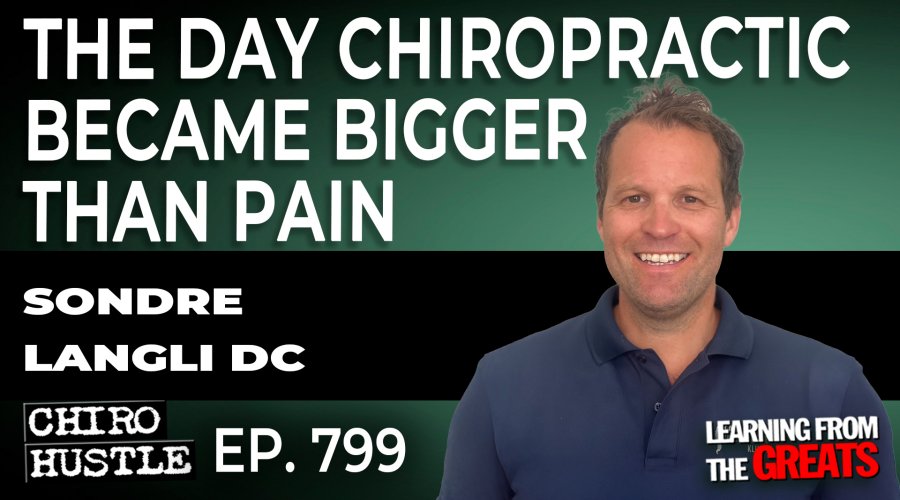
INTRODUCING Dr Sondre Langli DC
5 Alternate Titles
- He Said, “I Got My Life Back” with Dr Sondre Langli DC – Chiro Hustle Podcast 799
- The Patient Who Changed His Chiropractic with Dr Sondre Langli DC – Chiro Hustle Podcast 799
- Protecting Vitalistic Chiropractic with Dr Sondre Langli DC – Chiro Hustle Podcast 799
- Why Subluxation Still Matters with Dr Sondre Langli DC – Chiro Hustle Podcast 799
- Chiropractic Is Bigger Than Pain with Dr Sondre Langli DC – Chiro Hustle Podcast 799
🧠 Background
Dr Sondre Langli DC did not begin his professional life as a chiropractor.
Originally from Norway and now practicing in Sweden, Dr Langli first graduated as a physical therapist and worked in rehabilitation. The work was meaningful, but while observing chiropractors, he noticed something different happening in their offices.
People seemed different.
They were smiling.
There was something occurring beyond what he was experiencing in the rehabilitation environment.
Then he experienced chiropractic personally.
An adjustment produced a change he could feel but, at the time, could not fully explain. Something about chiropractic called him toward a different path.
That path eventually took him to Australia, where he studied chiropractic at Macquarie University in Sydney. His education prepared him well technically, and he entered practice primarily through the familiar pain-based model of back pain, neck pain, and headaches.
He became successful at it.
But he could not shake the feeling that chiropractic had to be something more.
Through mentorship, coaching, exposure to vitalistic chiropractors, and eventually a patient encounter he would never forget, Dr Langli began moving toward a subluxation-centered, vitalistic understanding of chiropractic.
Today, after roughly 16 years in chiropractic practice, he has become an advocate not only for the adjustment but for preserving the philosophy, language, community, and identity that make chiropractic distinct.
🔥 Highlights
- How a physical therapist from Norway discovered chiropractic and ultimately changed careers.
- Why observing happier people inside chiropractic offices first made Dr Langli question whether something deeper was happening.
- The personal chiropractic experience that created a calling he could feel before he could explain it.
- Dr Langli’s transition from a successful pain-based practice toward vitalistic, subluxation-centered chiropractic.
- The young patient who entered his office saying simply, “I’m sick.”
- How that patient encounter permanently changed Dr Langli’s understanding of what chiropractic could mean in someone’s life.
- The unexpected meeting years later when the patient revealed just how low his life had been before entering the office.
- Why Dr Langli believes chiropractic cannot allow its identity to be reduced to pain treatment and musculoskeletal manipulation.
- Concerns in Europe about replacing chiropractic language such as subluxation and adjustment with terminology that changes the identity of the profession.
- Why chiropractors who care about the direction of the profession must participate in boards, schools, organizations, policy, and leadership.
- The importance of mentorship for students and young chiropractors.
- Why Dr Langli recommends students observe as many successful chiropractors as possible.
- Why Chiro Europe felt like “coming home” for Dr Langli.
- The importance of gathering with chiropractors who believe deeply in the philosophy, art, and purpose of chiropractic.
- Why the chiropractor’s presence, certainty, grounding, and focus matter when someone gets on the table.
- The challenge to protect chiropractic not merely for today’s practices, but for generations yet to come.
From Our Sponsors and Partners
JAMES CHESTER (HOST): You made it to Chiro Hustle! Sit back and learn from the greatest influencers in the profession on the world’s number-one chiropractic podcast. Before we dive into this powerful episode, please remember to subscribe to our channels and give us a 5-star rating on iTunes to continue hustling.
This episode is brought to you by…
ChiroHD – More than an EHR; Practice Management, Simplified
The Chiro Speaking Company – Attract, Educate & Convert
ChiroSpring – cloud-based, user-friendly software with all the essential features chiropractors need
The Chiro Hustle Podcast is sponsored by Chiro Health USA, ChiroScript AI, Chiro Moguls, Pure Chiro Notes, Titronics, Sherman College of Chiropractic, Life Chiropractic College West, and the IFCO.
Do you want to support The Sacred Trust and uphold a Subluxation model without the grind of launching a new project? Visit our Patreon, choose the tier best suited for you. That way we can continue keeping “The Big Idea” strong, supporting speech, medical, and family health freedoms.
Now let’s hustle!
📖 Summary
There was a young man who walked into Dr Sondre Langli’s chiropractic office without the usual complaint.
He did not say his back hurt.
He did not describe neck pain.
He simply said:
“I’m sick.”
He had been through doctors, scans, blood tests, and evaluations. His life was unraveling. He had been removed from university, his girlfriend had left him, and he was self-medicating with alcohol and drugs.
Dr Langli began checking and adjusting him.
Over time, something seemed to change. He began smiling again. His eyes looked different. Eventually, he left town to attend another university.
Dr Langli knew the experience had affected the young man, but he did not yet understand how deeply.
Then, roughly two years later, the two unexpectedly met at a gym.
The former patient approached him and asked whether Dr Langli remembered him.
Of course he did.
Then the man revealed something Dr Langli had never known.
The week he first entered the chiropractic office, he had been considering taking his own life.
He remembered that his first visit had been on a Monday.
And he told Dr Langli:
“When you started to adjust me on Monday, I got my life back.”
The two men hugged.
Dr Langli walked to his car afterward knowing something within him had changed too.
For him, that was the moment chiropractic became unmistakably bigger than treating pain.
In Episode 799 of the Chiro Hustle Podcast, Dr Langli joins the conversation from Sweden to explore his journey from a pain-based approach toward vitalistic, subluxation-centered chiropractic and the responsibility chiropractors carry to protect the profession that changed both his life and the lives of the people he serves.
The discussion expands from one patient to the future of chiropractic itself.
What happens when chiropractic schools, boards, and regulators begin removing the words that historically defined the profession?
What happens when subluxation becomes something else, adjustment becomes manipulation, and innate intelligence and universal intelligence disappear from the professional conversation?
Dr Langli believes chiropractors cannot respond merely by complaining about the direction of the profession.
They have to participate.
They must lead.
They must mentor.
They must tell the chiropractic story.
And they must build communities where students, new graduates, and established chiropractors can experience a profession grounded in something larger than symptoms.
That is what Dr Langli found through mentorship, coaching, and gatherings such as Chiro Europe.
It felt like coming home.
Episode 799 is ultimately about remembering what chiropractic is—and recognizing that if chiropractors do not clearly communicate and protect their own identity, someone else will define it for them.
🔍 Diving In
1. The Patient Who Changed the Chiropractor
One of the most important ideas in this episode is that the patient was not the only person changed by the encounter.
Dr Langli adjusted the young man.
But years later, when he learned what that care had meant to him, the experience also adjusted Dr Langli’s understanding of his own profession.
Until then, he had already begun moving toward vitalism. He knew there had to be more to chiropractic than treating pain.
This experience gave that belief a human face.
The young man did not enter the office asking for symptom relief. He entered believing something was fundamentally wrong with his life and health.
Years later, his words—“I got my life back”—became part of Dr Langli’s chiropractic “why.”
That is the power of a story.
A philosophy becomes much harder to dismiss when it has been experienced.
2. Pain May Bring Someone In—but It Does Not Have to Define Chiropractic
Dr Langli was trained in a pain-based model and became good at practicing within it.
Back pain.
Neck pain.
Headaches.
Those complaints can certainly introduce someone to a chiropractor.
But Dr Langli eventually realized that allowing pain to completely define chiropractic also limits the chiropractor’s understanding of the profession.
His transition was toward asking a different question.
Not simply:
“Where does it hurt?”
But:
“Where is the subluxation, and what needs to be checked and adjusted?”
The distinction changes the center of the encounter.
The symptom is no longer chiropractic itself.
The person is.
3. Language Protects Identity
A major concern in the conversation is the movement within parts of European chiropractic education and regulation away from traditional chiropractic terminology.
Subluxation.
Adjustment.
Innate intelligence.
Universal intelligence.
These are not treated in this episode as disposable vocabulary.
They represent the philosophical architecture through which vitalistic chiropractors understand what they do.
Change the language long enough and you can eventually change the identity.
Calling an adjustment “manipulation,” for example, does more than substitute one word for another. Dr Langli and the Chiro Hustle conversation argue that it can place chiropractic inside an entirely different paradigm.
If chiropractors want chiropractic to remain distinct, they must be capable of explaining—with clarity and conviction—what those distinctions actually mean.
4. Stop Complaining About Leadership and Become Leadership
Another major message of Episode 799 is practical.
If chiropractors dislike the direction their profession is moving, standing outside the institutions complaining about them will not be enough.
Get involved.
Serve on boards.
Participate in professional organizations.
Teach.
Mentor students.
Build relationships with policymakers.
Support organizations representing chiropractic principles.
Have conversations with the people writing regulations.
Leadership cannot belong exclusively to the people willing to show up.
Chiropractors who believe strongly in the identity and future of the profession must also be willing to accept responsibility for protecting it.
5. Students Need More Than School
Dr Langli gives particularly valuable advice to chiropractic students and new graduates:
Observe chiropractors.
Not one.
Many.
Spend time around chiropractors whose practices, values, adjusting skills, relationships, and lives represent something worth learning.
Ask questions.
Get adjusted.
Watch how they communicate.
See how they care for people.
Learn how they carry themselves.
The experienced chiropractors students may place on pedestals are still people—and many of them are willing to share what decades of experience have taught them.
Formal education may provide a degree.
Mentorship helps build a chiropractor.
6. Find Your Chiropractic Community
For Dr Langli, Chiro Europe became more than another seminar.
It felt like coming home.
He found chiropractors who were excited about chiropractic, cared about their patients, believed in the profession, enjoyed what they were doing, and were willing to challenge and support one another.
That community matters.
Chiropractic can become isolating when a doctor spends every day inside one office.
Gathering with principled chiropractors restores perspective.
It reinforces philosophy.
It improves skill.
It builds relationships.
And perhaps most importantly, it reminds chiropractors that they are part of something much larger than their individual practices.
7. The Adjustment Requires Presence
Near the end of the conversation, Dr Langli describes something deeper about the art of practice.
When a patient enters the office, the chiropractor must be able to leave personal problems outside.
Be grounded.
Be focused.
Be present.
For those moments, the person in front of you is what matters.
Dr Langli describes the experience almost as though time stops.
That presence cannot be reduced to technique.
Technique matters.
Skill matters.
The check matters.
The adjustment matters.
But the chiropractor delivering it also matters.
The art of chiropractic is expressed through the person practicing it.
8. The Future Will Belong to the People Who Tell the Story
If chiropractors do not tell people what chiropractic is, someone else will.
That warning runs throughout Episode 799.
The public needs the story.
Students need the story.
Policymakers need the story.
Future chiropractors need the story.
And that story cannot only circulate between chiropractors at chiropractic events.
It has to leave the room.
Dr Langli shares an important shift in how he now thinks about referrals: not merely as another patient coming into the practice, but as another opportunity for the message to go out.
The future of chiropractic depends on chiropractors becoming effective custodians and communicators of their own profession.
⚡ Action Steps
1. Revisit Your Own Chiropractic “Why”
Ask yourself when chiropractic became something more than an occupation for you.
Find the story.
Write it down.
Learn to tell it.
2. Examine Your Language
Listen to how you describe chiropractic to patients.
Are you communicating chiropractic—or merely describing pain treatment?
Know what you mean by subluxation, adjustment, innate intelligence, and the purpose of the chiropractic check.
3. Find a Mentor
Identify a chiropractor whose practice and principles you respect.
Buy them lunch.
Ask questions.
Get adjusted.
Observe.
4. Mentor Someone Behind You
If you have experience, make yourself accessible to students and younger chiropractors.
The philosophy, art, and practical wisdom of chiropractic have always been transmitted person to person.
5. Get Involved
If you believe chiropractic leadership is moving in the wrong direction, participate rather than watching.
Join organizations.
Attend meetings.
Serve.
Teach.
Speak.
Lead.
6. Get Around Chiropractors Who Strengthen Your Conviction
Find gatherings such as Chiro Europe and other principled chiropractic communities where philosophy, adjusting, leadership, and fellowship are reinforced.
7. Take the Message Outside Chiropractic
Do not only explain chiropractic to chiropractors.
Tell patients.
Families.
Community leaders.
Students.
Policymakers.
The profession grows when its message leaves the chiropractic room.
8. Be Fully Present at the Table
Before checking someone, become grounded.
Leave the distractions outside.
For those moments, serve the person directly in front of you.
9. Protect the Words That Protect the Profession
Understand chiropractic’s language well enough to defend it intelligently.
The profession cannot preserve an identity it is unwilling or unable to articulate.
10. Remember: You Are One Story Away
One conversation, one adjustment, one student, one patient, or one story may travel further than you will ever know.
Keep telling the chiropractic story.
📢 Hashtags:
#ChiroHustle #Chiropractic #SondreLangli #Subluxation #VitalisticChiropractic #ChiropracticPhilosophy #InnateIntelligence #UniversalIntelligence #ChiropracticAdjustment #ChiropracticLeadership #ChiroEurope #ChiropracticStudents #ChiropracticMentorship #FutureOfChiropractic #ChiropracticProfession
Chiro Hustle Podcast, Chiro Hustle, Dr Sondre Langli, Sondre Langli DC, chiropractic, vitalistic chiropractic, subluxation, subluxation centered chiropractic, chiropractic philosophy, innate intelligence, universal intelligence, chiropractic adjustment, chiropractic leadership, chiropractic Europe, Chiro Europe, chiropractic students, chiropractic mentorship, future of chiropractic, chiropractic profession, chiropractic identity, chiropractic story, chiropractic practice, Tim Young chiropractic